Precision Robotics Brackets: Custom Manufacturing for Automation & Machinery
In robotics and automated systems, a bracket is rarely just a mounting point. It is a critical component that determines the accuracy of sensor placement, the rigidity of a robotic arm, and the overall assembly fit of the entire machine.
At BracketMFG, we specialize in manufacturing custom metal brackets specifically for the robotics and industrial automation sectors. We understand that a misalignment of a fraction of a millimeter can lead to sensor failure, binding in mechanical assemblies, or costly downtime on the production line.
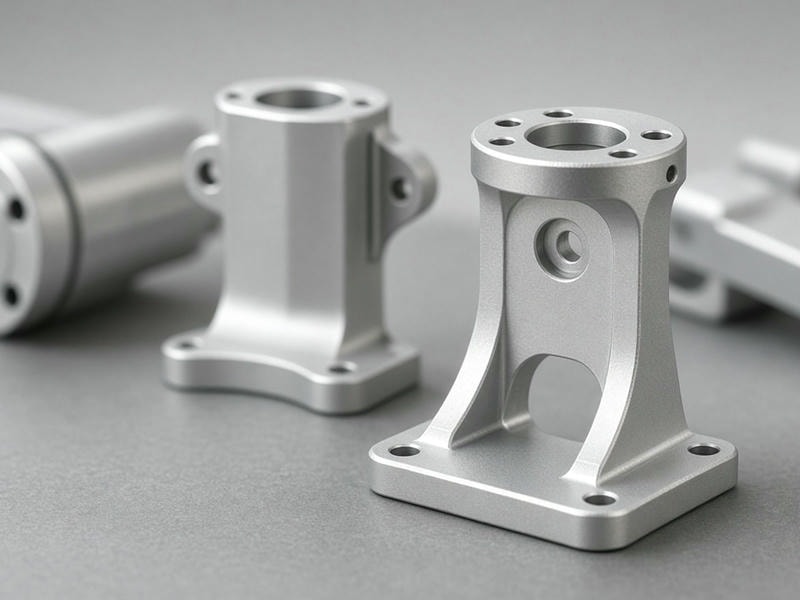
Technical Specifications & Manufacturing Capabilities
We move beyond standard sheet metal work by focusing on the specific requirements of robotics hardware. Our facility in Dongguan is equipped to handle the high-precision demands of robotics engineers, from initial prototype to high-volume production.
Precision & Tolerance Control
Robotics applications require consistency. We maintain tight tolerances to ensure that your components fit correctly the first time they reach your assembly line.
- Critical Feature Tolerance
- ±0.05 mm
- Standard Dimensional Tolerance
- ±0.10 mm
- Standard Bend Angle Tolerance
- ±0.5°
- Laser Cutting Position Accuracy
- ±0.05 mm
- CNC Machining Tolerance
- Down to ±0.02 mm
Manufacturing Processes
We select the manufacturing route based on your specific volume and design requirements.
- Laser Cutting: High-speed, high-precision cutting for complex geometries (up to 20mm in Carbon Steel).
- Bending: Automated press brake forming with capacities up to 160 Tons and 3000mm length.
- Welding: TIG, MIG, Laser, and Spot welding services for structural integrity.
- Hardware Installation: In-house PEM nut and stud installation (M2 – M10).
- Surface Finishing: Durable finishes to withstand industrial environments, including Powder Coating, Anodizing, Nickel Plating, and Black Oxide.
DFM & Engineering Support
We do not just manufacture to print; we review designs to ensure they are manufacturable. When you submit your files (STEP, DXF, DWG, PDF), our engineering team evaluates your brackets for the points below.
Bend Feasibility
We verify that your bend radii (typically 0.5T – 1.0T) are achievable without cracking or material deformation.
Hole Location
We ensure hole patterns are optimized for assembly, accounting for material thickness and laser kerf.
Material Selection
Guidance on choosing the right material—such as Aluminum 5052/6061 for lightweight robotics or Stainless Steel for corrosion resistance—to balance weight, strength, and cost.
Welding Distortion
We plan our welding sequences to minimize heat-induced distortion, ensuring flatness and dimensional accuracy.
Scalable Production: From Prototype to Mass Volume
We support your project lifecycle through every stage of development.
Prototype & Low Volume
For R&D and pilot runs, we provide 1-piece to small-batch production using laser cutting and CNC bending. This eliminates the need for expensive tooling, allowing you to test fit and function quickly.
Typical lead times for prototypes: 3 – 7 days
Medium to High Volume
As your product moves into mass production, we optimize the process to reduce unit costs. We can transition your design from laser-cut prototypes to stamping dies or progressive tooling when volume justifies the investment, ensuring consistent quality and repeatability for thousands of parts.
Common Materials for Robotics Applications
Material choice directly affects weight, rigidity, corrosion resistance, and cost. These are the grades we most often run for robotics hardware.
Aluminum 5052 / 6061
Ideal for lightweight robotic structures and frames.
Stainless Steel 304 / 316
Necessary for medical robotics or environments requiring corrosion resistance.
Cold Rolled Steel
Cost-effective for internal structural components.
Spring Steel
Used for clips and tension-based brackets.
Request a Quote for Your Robotics Project
Reliable supply chains are essential for robotics manufacturing. We provide clear communication, consistent quality, and on-time delivery from our Dongguan facility.
To get started, send your drawings and requirements to .
Please include:
- 1 3D/2D Files: STEP, DXF, or PDF.
- 2 Material & Thickness: Specify grade and gauge.
- 3 Finish Requirements: Powder coating, plating, or raw.
- 4 Quantity: Expected annual usage or batch size.
BracketMFG
Custom Brackets, Made Better.