Custom Electronics Brackets Manufacturing
In electronics hardware assembly, a bracket is never just a piece of metal. It determines the fit, alignment, and thermal performance of your product. A poorly manufactured bracket can cause PCB stress, interfere with cable routing, or fail to meet grounding requirements.
At BracketMFG, we manufacture custom brackets specifically for the electronics and telecommunications industries — with strict adherence to hole patterns, bend angles, and assembly tolerances so your production line moves without interruption.
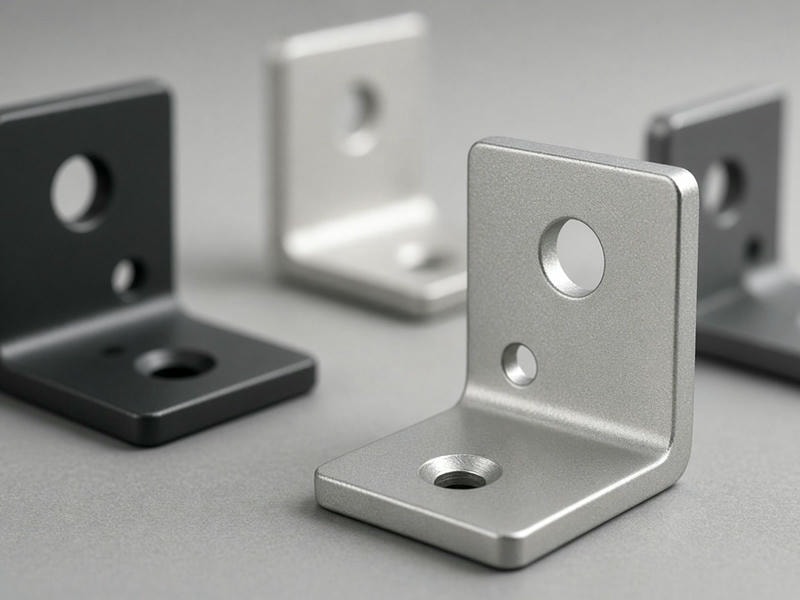
Precision Manufacturing for Electronics Hardware
Our production facility in Dongguan handles the specific demands of electronics enclosures, sensor mounts, and structural support components. We do not treat brackets as general sheet metal; we treat them as precision engineered parts.
We combine laser cutting, CNC bending, and hardware insertion to ensure every unit matches your design intent — for mounting PCBs, connecting sensors, and securing heat sinks.
| Specification | Typical Capability |
|---|---|
| Material Thickness | 0.5 – 12 mm |
| Standard Dimensional Tolerance | ±0.10 mm |
| Critical Feature Tolerance | ±0.05 mm |
| Standard Bend Angle Tolerance | ±0.5° |
| Minimum Laser-Cut Hole Size | Approx. equal to material thickness |
| Tapping Range | M2 – M12 |
| PEM Nuts / Studs | M2 – M10 |
| Surface Roughness | Ra 0.8 – 3.2 μm |
Engineering Support and DFM
We review every project before production begins. For electronics engineers, this means we check your STEP, DXF, or PDF files for manufacturing feasibility rather than just blindly cutting metal — catching potential issues at the drawing stage to prevent costly assembly line failures and rework.
Bend Feasibility
Ensuring bend radii are compatible with your chosen material to prevent cracking.
Hole Location Accuracy
Verifying that hole patterns align with your PCB or enclosure mounting points.
Assembly Tolerances
Confirming that parts fit correctly with other components in your assembly.
Material Selection
Advising on grades such as Aluminum 5052/6061 or Stainless Steel based on conductivity, weight, and environmental requirements.
Scaling from Prototype to Mass Production
We understand the electronics product lifecycle — from a single proof-of-concept prototype, to a small batch for testing, to thousands of units for market launch.
Prototype & Low Volume
For early-stage development, we use laser cutting and CNC bending. This approach requires no expensive tooling, allowing us to produce small batches with rapid lead times — giving you the flexibility to iterate your design without significant capital investment.
High-Volume Production
When your design is locked and volumes scale, we transition your project to optimized production methods. Where suitable, we move from laser cutting to stamping dies or progressive dies — reducing unit cost significantly while maintaining the exact dimensional consistency required for automated assembly lines.
Materials and Finishing for Electronics
Electronics applications often require specific surface properties for durability or grounding. We offer a comprehensive suite of finishing options tailored to these environments.
We work with a wide range of metals — Cold Rolled Steel, Stainless Steel (304/316), and Aluminum (5052/6061) — ensuring the material matches the thermal and structural needs of your electronics housing.
Corrosion Resistance
- Zinc Plating
- Nickel Plating
- Passivation
- E-Coating
Aesthetics & Insulation
- Powder Coating
- Painting
- Black Oxide
Conductivity & Marking
- Anodizing (Aluminum)
- Laser Marking
- Silk Screen Printing for part identification