Precision Manufacturing for Industrial Assemblies
BracketMFG manufactures custom metal enclosure brackets designed for electronics, server racks, HVAC systems, and industrial machinery. Based in Dongguan, China, we operate as a specialized partner for engineering and purchasing teams that require consistent quality, strict tolerance control, and reliable lead times.
We do not treat brackets as a secondary service; they are our primary product. Whether you need a single prototype for a new enclosure design or a high-volume run for an ongoing production line, our facility is equipped to handle the specific geometric and structural demands of enclosure mounting.
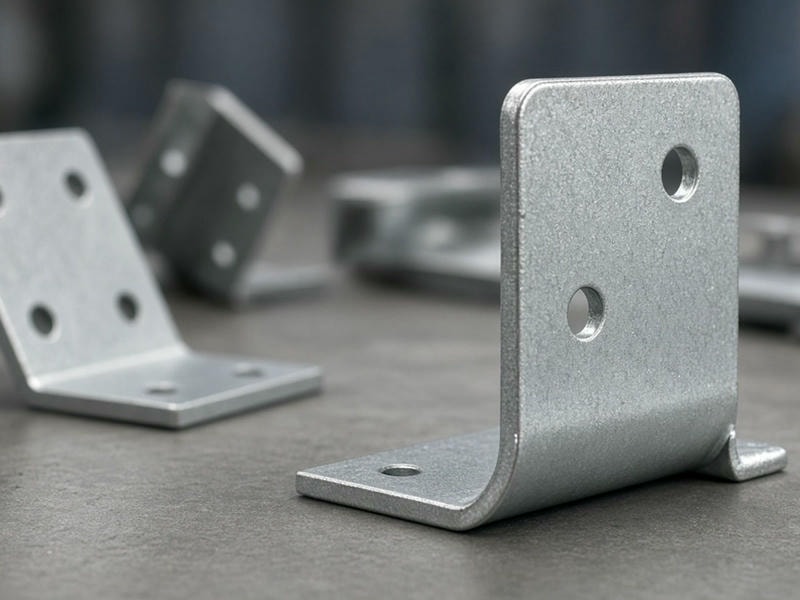
Precision Engineering for Enclosure Components
An enclosure bracket must perform more than just a structural role; it must facilitate efficient assembly. A misplaced hole, a slight deviation in bend angle, or improper flatness can disrupt production lines and increase assembly costs.
Dimensional Accuracy
We maintain standard tolerances of ±0.10 mm, with critical features held to ±0.05 mm.
Hole Pattern Integrity
Using CNC laser cutting and precise punching, we ensure that mounting holes align perfectly with your enclosure chassis and PEM hardware.
Welding Control
We utilize TIG, MIG, and spot welding techniques specifically calibrated to minimize distortion on thin-gauge materials common in enclosure design.
Manufacturing Capabilities
Our production floor is structured to accommodate varying project stages, allowing us to select the most cost-effective method for your specific volume and design.
Prototype and Low-Volume Production
For R&D, pilot runs, or low-volume requirements, we utilize laser cutting, waterjet cutting, and CNC bending.
This approach eliminates the need for expensive tooling, allowing for design flexibility and rapid iteration. We can integrate PEM nuts, studs, and standoffs during this stage to ensure the final assembly functions as intended.
High-Volume Production
When programs move into long-term production, we transition parts to stamping dies, progressive dies, or compound tooling.
By optimizing the production process, we increase throughput and reduce the unit cost significantly, providing a scalable solution that grows with your product demand.
Surface Finishing for Environmental Protection
Enclosure brackets often operate in diverse environments, from climate-controlled data centers to outdoor industrial sites. We provide a full suite of surface treatments to meet specific corrosion resistance, conductivity, and aesthetic requirements.
-
Corrosion Resistance: Zinc Plating, E-Coating, Dacromet, and Passivation.
-
Aesthetics & Durability: Powder Coating, Painting, and Black Oxide.
-
Functional Finishes: Anodizing (Aluminum), Brushing, Polishing, and Sandblasting.
-
Identification: Laser Marking and Silk Screen Printing for part numbers or assembly instructions.
Material Selection
We maintain an inventory of standard metals commonly used in enclosure and bracket fabrication. Our supply chain team ensures material traceability and consistency for repeat orders.
Steels
Cold Rolled, Hot Rolled, Galvanized, and Spring Steel.
Stainless Steel
201, 304, and 316 grades.
Non-Ferrous
Aluminum (5052, 6061), Copper, and Brass.
Technical Specifications
Key process parameters covering material thickness, cutting, forming, tapping, and surface finish for enclosure bracket production.
| Feature | Capability |
|---|---|
| Material Thickness | 0.5 mm – 12 mm |
| Laser Cutting (Carbon Steel) | Up to 20 mm |
| Laser Cutting (Stainless) | Up to 12 mm |
| Laser Cutting (Aluminum) | Up to 10 mm |
| Press Brake Capacity | Up to 160 Ton |
| Standard Bend Tolerance | ±0.5° |
| Tapping Range | M2 – M12 |
| PEM Hardware | M2 – M10 |
| Surface Roughness | Ra 0.8 – 3.2 μm |
Engineering Support & DFM
Our engineering team reviews every drawing before production begins. We provide Design for Manufacturability (DFM) feedback to optimize your enclosure brackets for cost and performance.
Bend Feasibility
Ensuring radii are compatible with material thickness.
Assembly Tolerances
Verifying that hole patterns and hardware placements allow for seamless integration.
Material Utilization
Suggesting material thickness or grade changes to balance strength requirements with cost targets.
Request an RFQ
To receive a quote, please send your technical documentation to . We accept STEP, STP, DXF, DWG, PDF, and AI file formats.
When submitting your request, please include:
-
1
Engineering Drawings: Including all dimensions, tolerances, and hardware specifications.
-
2
Material and Finish Requirements: Specify grade, thickness, and any coating standards.
-
3
Order Volume: Quantities for prototype or annual production requirements.
Our team will review your files and provide a detailed quotation, including lead times and manufacturing feasibility notes.